

"Cleanliness is holiness!" Said Sojourner, and "How much does it cost?" asked the wallet.

But it doesn't have to cost a lot! Organizing before, during, and after you clean takes time, resources, and awareness. Space is used efficiently, thoughtfully, and habitually; actions lay the foundation for a graceful life where everything has a place, and well, not all, but most things are in their place.

Everything has a place and most of the time, everything is in its place.
So, before judging the random, or not, clutter, think of what it takes to clean up the mess we've made of this world as consumerism continues to ruin our beautiful planet beyond repair.
If we bought less junk and kept only what's used and necessary, the world would have a lot less trash in the oceans and landfills.
"To buy or not to buy," the book shelved at the Library of the Wolsonian Museum, written by the students of our class (mine and Mrs. Alonso's), hits it on the head.
Our power as consumers lies in "to buy or not to buy."
Remember that fat corporate America doesn't have our back, but has us by our throats; we may as well be identified as indentured servants for posterity.
It's not about doing without; we're going to buy, but we are going to measure what we purchase against our needs and within our space and lifestyle more carefully.
Order begets cleanliness. It starts when you wake up every day. Your routines and the aesthetics of your environment are more than basic hygiene.
It is the efficiency of space, dictated by routine, that saves us time and reduces friction during the daily chores. It is to have a place for everything and put things in their place. It is to value what we have and to demonstrate the respect we give to our place of residence and our community. That reflects on the kind of person that we are.
To me, decluttering and organizing are not chores; they are even more important than disinfecting, scrubbing, and mopping or dusting. It affects my mood and my mental health to be in a cluttered space.
Everyone knows I blog about my memoirs as a writer and a teacher. This blog is about the lessons I learned from Sojourner, writing her biography, and applying her vision today. I also hope you know that every purchase of any of the books I recommend here helps increase CAMP's impact in our communities.

CAMP's mission is to create and disseminate conscious media by conscious artists, writers, and business people. The affiliate links I share will help us earn and expand.
In 2026, we want to bring one of our best stories to the Guadalajara Book Festival. We are working on its translation into Spanish.
We also want to attend and compete in Guadalajara's Film Festival.
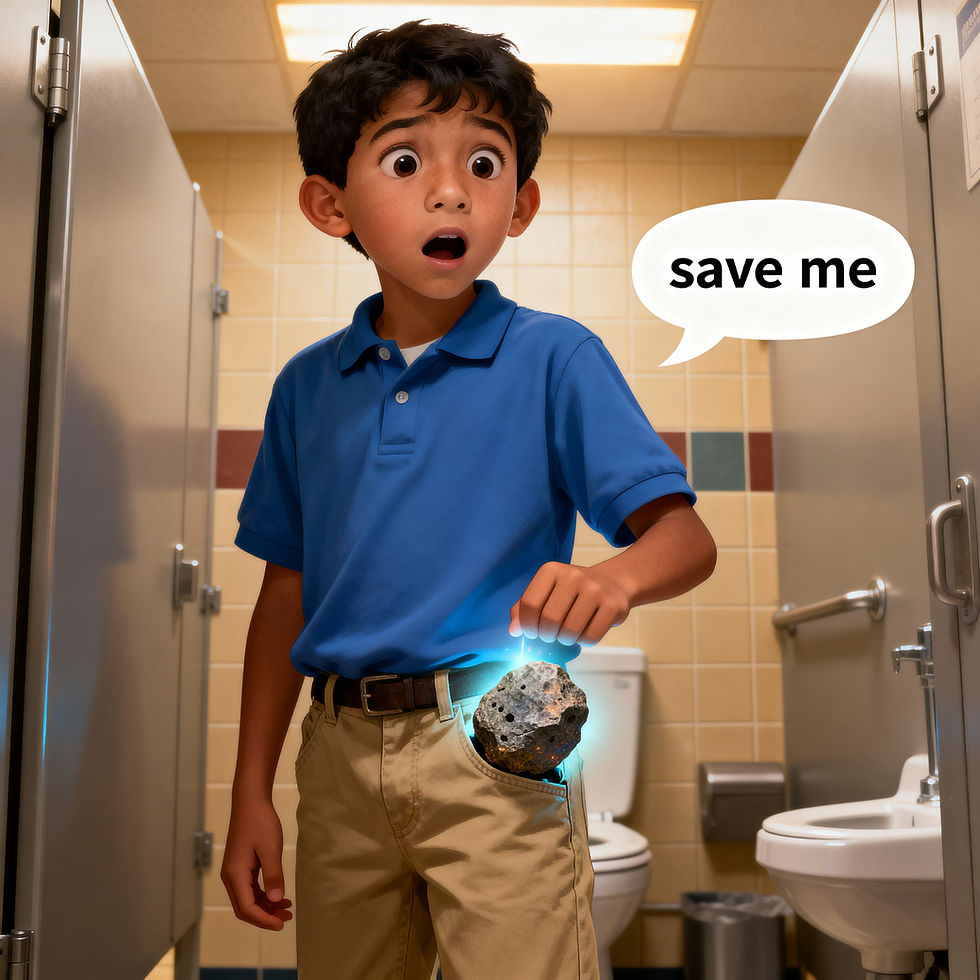
We have a lot of books and projects lined up. Max and the Meteorite, Isabel III, a third edition of Sandcastles, Spiderwoman in Spanish, Zoom Zoom We're Going to the Moon, the first book of the series, Lylo and Leonides.
The Path to Peace game prototype is in the making. The Peace Talk and Art Workshop must be more than a dream.
With your support and blessing, we can succeed in bringing peace and conscious media to readers and viewers. Here is the link to our bookstore. https://www.angelaterga.com/product
If you or someone you know has a clutter problem, please purchase this great book. It has the best reviews on the topi of the psychology of clutter.

But we can do better. What does it take to become conscious consumers and clean up the earth? First, we could clean up our buying habits and exercise our buying power to do so.
Many don't realize how a small change in our habits can lead to a greater patch of clean river. Everything starts with me, you, us, and our.
Our 42-student combined Language Arts class with team teachers, back in 2007, wrote a book titled "To Buy Or Not to Buy" to create awareness of the history of child labor in the world and the state of child labor affairs in the world. It is a book, not for publication, but for display. So if you are ever in South Beach, by all means, visit the Wolfsonian Museum. Ask them to take you to their Library and preview the titles created by select classrooms in Miami-Dade schools.
To Buy Or Not To Buy may sit at the Jordanian Library of the Wolsonian Museum in South Beach, but you walk into Walmart every week. The power is within you. The United Nations has a special committee for child labor laws that came up with a seal to stamp on goods that were CHILD LABOR FREE, but I haven't seen it around, have you?
Soooo, this "mad" teacher remembers the joy, the feeling of accomplishment, and the pride in all of us as we worked with the Art department's teacher to illustrate the book through dolls who were the characters, "haves" and "have-nots."
The 'have-nots' dolls in the display were not consumers; their financial status prevented them from becoming heavy consumers, so their clothing wasn't branded, and their shoes barely had a sole.
In our research, we discovered that the 'have nots' have been and are the labor force employed in industrialized, feudal. royal, or imperial societies. In communal societies, adulthood was marked by a certain age and carried new responsibilities. Child labor was not as pervasive in pre-colonial times in native communities as it is now. In parts of the globe where child labor is most prevalent, children are favored over adults because of their stamina and small frame, which are ideal for certain tasks.
The brands that hire child labor worldwide are many, notably Nestle (World's Best Chocolate, one of the American schools' most successful fundraisers, Nike, and many others. Just "Google" if you want an updated list.
But do you, the consumer, care? Nope! Not just our pockets, but also our minds, are shaped by the consumerist ignorance of a world where things are expendable because "it pays" to buy new. Yea! You pay!
In ancient cultures, children reached adulthood at a younger age and lived shorter lives. Today, in industrialized, first-world countries, we extend childhood as long as possible to allow for job vacancies to catch up.
Our memoir today consists of the book our class wrote together, and the recent visit to the Hudson River, where I crossed it from Poughkeepsie to the town where Sojourner Truth, born Isabella Baumfree, was born in the Catskills Mountains of the State of New York.
This mad teacher has a new memory to include—a visit to the Hudson's "Walkway Over the Hudson" from Poughkeepsie to Highland, where the Sculpture of Sojourner Truth was unveiled in 2020.
I visited in 2021 and enjoyed a great Mexican meal, superb company, and Kirtan music.
Sojourner was the best and most efficient housekeeper, farmhand, wool spinner, wheat harvester, laundress, you name it, she was the best at it. It gave her personal pride to be. They couldn't break her spirit. She did it for God, to whom she talked every day.
She took great pride in wearing impeccable clothes and being demure. Her dwellings were modest but orderly and impeccable. Her dress was not the latest fashion style, but of quality fabric.
She was refined in her speech, in her walk, in her thought, and deed. Not because she came from slavery, did she think less of herself.
Her story is one of unique hues, and its full splendor is hardly rightly served. But one day the world will know the incredible force behind the words "Ain't I a Woman?" if that was what she said. It sure was what she meant.

A northerner born in New York, in the Catskill Mountains at the end of the 17th century, gave her almost three centuries of wisdom.


Comments