

Cuba-US Peace As Attitude: Without Prejudice

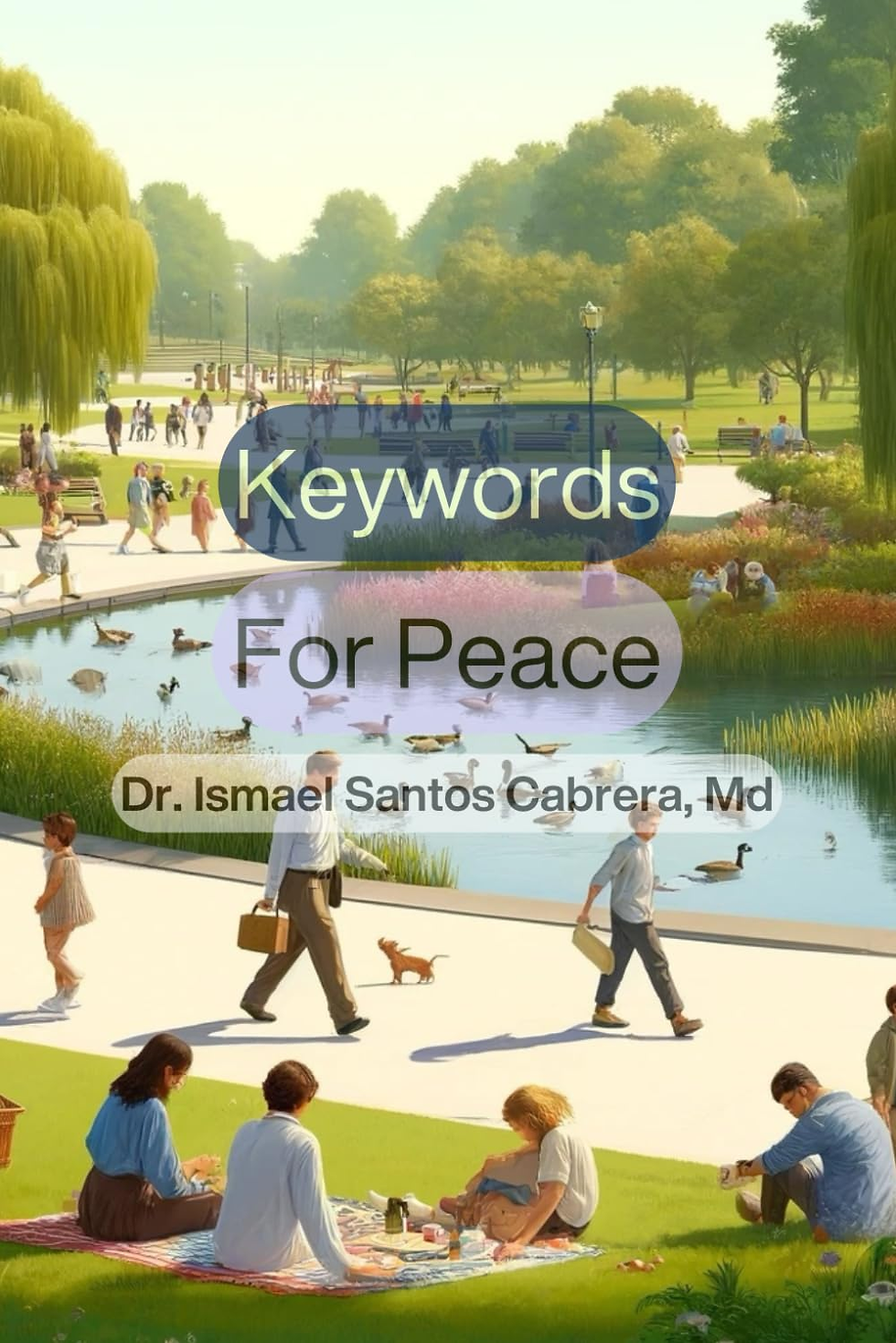
Cuba-US Peacebuilding communication starts with toleranc, one of the keywords for peace in dr. santos book.

I have been a student of comparative religion since the 80s, when I came upon one of my favorite authors, Joseph Campbell. Since then, I understood religion as the Peace of God and have cultivated faith and Inner Peace through communication with the Supreme and by reading comparative philosophies. I have observed and deduced that we are all one love, as the saying goes; I believe the cultivation of Peace will deliver Love and Prosperity. But I also believe Peace requires the evolution of our psyche, the development of different thinking and thought patterns in society's fabric, starting with the reflection in the mirror.
when you change the way you look at things the things you look at change. Cuba-Us relations depend on our ability to have one vision of peace
Today, I visit a local Christian Church, but I was a volunteer at Zen Village where I met Buddha, years back. At my local church, today, I receive sensible, logical spiritual guidance that helps me find peace within and find love and tolerance and all the keywords for peace. I also practice yoga, bowl singing, and meditation, and I have dedicated a space in my home to Oriental philosophies. At CAMP1.org we believe that peace is the universal language of a higher consciousness that comes from God, the Supreme.

Christianity and Buddhism both contain powerful teachings that place Peace not merely in politics or social order, but inside the individual first—in the regulation of anger, hatred, fear, judgment, and retaliation. From there, peace becomes a way of relating to others.
For the New Testament passages below, I’m using the King James Version, which is in the public domain.

New Testament teachings on peace
Matthew 5:9 — “Blessed are the peacemakers: for they shall be called the children of God.”
This is especially strong for my theme because Jesus does not simply praise people who want peace. He praises peacemakers—people who actively create it.
John 14:27 — Jesus tells his followers that the peace he gives is different from what “the world” gives. The idea is that peace has an inner spiritual source, rather than depending entirely upon external circumstances.
Romans 12:18 — “If it be possible, as much as lieth in you, live peaceably with all men.”
The phrase “as much as lieth in you” is particularly relevant to the idea that peace is an attitude. It places responsibility for peace first within one’s own conduct.
Romans 12:21 — “Be not overcome of evil, but overcome evil with good.”
This rejects retaliation as the highest response to conflict.
Galatians 5:22 — “But the fruit of the Spirit is love, joy, peace…”
Peace here is described as a fruit of spiritual development—something produced within the human being.
Philippians 4:7 — Paul speaks of the “peace of God, which passeth all understanding.”
This points strongly toward peace as a state of consciousness rather than merely the absence of conflict.
Colossians 3:15 — “And let the peace of God rule in your hearts…”
Again, peace begins in the heart before it manifests socially.
James 3:18 — “And the fruit of righteousness is sown in peace of them that make peace.”
Peace is both a condition and a practice: peaceful actions create further peace.
Buddhist teachings on peace
Some popular sayings attributed to the Buddha online are actually modern paraphrases, so I use teachings traceable to the Dhammapada rather than unattributed internet quotations.
Dhammapada 5 — “Hatred is never appeased by hatred in this world. By non-hatred alone is hatred appeased.”
This may be the single strongest Buddhist parallel to the Christian teaching of overcoming evil with good.
Dhammapada 6 teaches that those who recognize the impermanence of life “settle their quarrels.”
Awareness changes one’s perspective: conflict becomes less important when seen within the larger reality of human mortality.
Dhammapada 129 — “All tremble at violence; all fear death. Putting oneself in the place of another…” one should refrain from killing or causing killing.
This is essentially an instruction in empathy: understand another being by recognizing yourself in them.
Dhammapada 130 similarly teaches that life is dear to all, and asks the practitioner to compare others with oneself.
Dhammapada 131–132 contrasts harming others while seeking one’s own happiness with refusing to oppress other beings who also desire happiness.
Peace therefore emerges from recognizing that my desire for happiness is not more important than yours.
Dhammapada 133–134 warns against harsh speech and praises the abandonment of vindictiveness.
This makes peace a discipline of speech as much as thought or action.
Dhammapada 145 describes the virtuous as people who master themselves.
This connects directly to the idea that peace begins with ourselves: before trying to control another person, society, or nation, the practitioner learns to govern the self.
What is fascinating is how closely the underlying principles meet.
Christianity: “Overcome evil with good.”
Buddhism: Hatred cannot end hatred; only non-hatred can end it.
Christianity: “Live peaceably with all men.”
Buddhism: Put yourself in the place of another.
Christianity: Let peace rule in your heart.
Buddhism: Master the mind, speech, anger, and reaction.
They arise from very different religious and philosophical traditions, so I do present Buddhism and Christianity as saying precisely the same thing. They converge on something profound: peace requires an interior transformation before it can become an exterior reality.
That supports my idea of peace as a form of higher consciousness:
Peace begins as an attitude toward ourselves. It is the conscious refusal to allow anger, fear, hatred, pride, or retaliation to govern the mind.
From that inner discipline comes the ability to recognize ourselves in another person—even an adversary. Christianity calls us to make peace, forgive, love, and overcome evil with good. Buddhism asks us to master ourselves, abandon hatred and recognize that every being seeks happiness and fears suffering. Both traditions therefore point toward a common human insight: we cannot create externally the peace we have not begun to cultivate internally.
And that gives you a particularly strong bridge back to Cuba and the United States: peace between nations does not require agreement on ideology. It requires the capacity to see beyond ideology long enough to recognize the humanity on both sides.
I recently published books by Cuban authors living on the island. They are works of art; one shows us how to create peace in our lives and have an attitude of peace through 15 keywords for peace. Another one is a Decimas Poetry book about Cuban family, places, and things.
They were published at no cost to the authors, and they remain in the market with an attitude of peace. Visit angelaterga.com/product and support peace. Please. Everyone gets their cut; the billionaire takes 70%, the rest is split, but I give away my share as a non-profit. Thank you! If you have a better way to sell without the intermediary that makes the platform possible, message me here.
I do not require of you to agree with me on politics for me to appreciate your thoughts of peace and filial poetry. I do not want to call you right or wrong, I want to call you friend and partner in the process of living in peace and for peace and lasting peace which allows you to be socialist like Norwegians or reinvent your own kind of communism like China, or Zionist. I give you sovereignty over your political development. I give you peace. If peace is in your policy, then we can rest our case.
Peace is in our hands!

To See the Tree Anew
Stand before it,
not as a scholar naming its veins,
nor as a carpenter weighing its worth in planks,
but as a wanderer
arriving at the edge of an undiscovered world.
Let your eyes forget
the word tree.
See instead the slow green flame
climbing from the earth’s dark lamp,
each leaf a trembling tongue
speaking in light.
Notice how the wind
writes invisible music in its limbs,
how the bark holds
the memory of rain and sun
in a language older than speech.
Do not ask its age—
ask instead what it has seen:
the birth of mornings,
the passing of shadows,
the patient turning of seasons
like pages in a book without end.
And when you leave,
carry with you
not the image of a tree,
but the astonishment
of meeting it
for the very first time.
I hope this poem is Tagore's.
READ FOR PEACE. GIVE FOR PEACE.
Two books. Two voices. One invitation to a more peaceful world.
Discover Palabras Clave para la Paz by Ismael Santos Cabrera, M.D., a thoughtful exploration of the human values and attitudes that can help us practice peace within ourselves and with one another.
Experience Décimas by José Arias, a collection of poetry that preserves the beauty, rhythm, wisdom, and cultural tradition of the décima through the power of the written word, today, and is full of everyday Cuban life.
When you purchase these books through Conscious Arts Media Productions (CAMP), your contribution becomes more than a book purchase. It becomes a donation in support of CAMP’s charitable mission to advance peace education and conscious arts through literature, creativity, artists, and community programs.
Buy a book. Support an author. Preserve a voice. Help us put peace into practice.
YOUR BOOK CAN BECOME YOUR CONTRIBUTION TO PEACE.
Visit CAMP1.org to purchase, donate, and support the work of Conscious Arts Media Productions.
READ • CREATE • SHARE • PRACTICE PEACE
One small recommendation: if the full purchase price is not tax-deductible because the donor receives a book in return, I would avoid saying the entire purchase is a “tax-deductible donation.” Instead, we can say “your purchase supports CAMP” and specify separately what portion, if any, qualifies as a charitable contribution.
I can also make this into a beautiful bilingual English/Spanish promotional poster for both books, with spaces for the two book covers and a CAMP donation QR code.



Peace Beyond Propaganda:
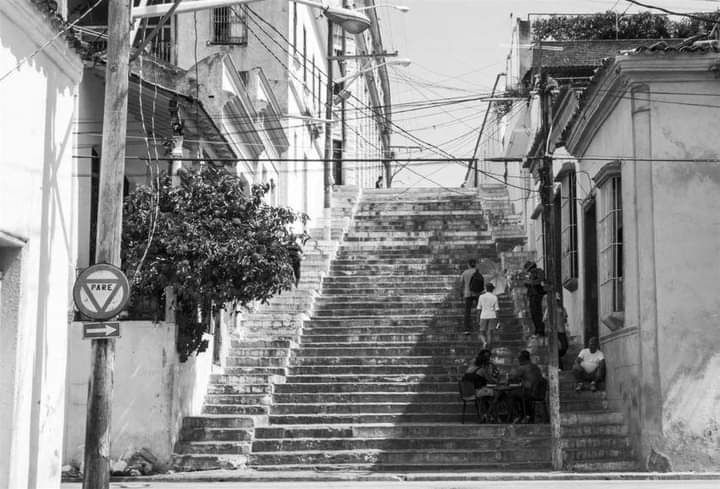
These are some of the photos donated by visitors to Cuba which you can find in the book. We are asking you to donate pictures of Cuba's natural fauna and flora, and city establishment shots.
I signed up for a

Cuba-US relations and the Courage to Stop Being Enemies.
Yes. Peace can be understood as an attitude before it becomes a political agreement. It is a way of looking at another person—or another nation—without first reducing them to an enemy, an ideology, or a stereotype.
Tagore taught me how to do that in his poem about looking at a tree for the first time without prejudice.
In the relationship between Cuba and the United States, it matters because both societies have lived for generations inside powerful political narratives.
After more than six decades, one can reasonably ask whether permanent hostility has accomplished what either people truly needs.
And perhaps that is where the concept of peace becomes powerful: Peace is an attitude because reconciliation begins before policy changes. It begins when we become willing to see the humanity of the person we have been taught to regard only as an adversary.
For Cuba and the United States, peace would not mean erasing history. It would mean refusing to make future generations continue living inside it.
“Peace Beyond Propaganda: Cuba, America, and the Courage to Stop Being Enemies.”
The Cuban government has used revolutionary and anti-imperialist messaging to explain the conflict and justify its policies. U.S. governments have often framed Cuba primarily through communism, national security, human rights, and geopolitical rivalry. Those narratives contain real historical grievances and legitimate concerns, but they can also become filters through which each side stops seeing the people on the other side.
A Peace attitude asks a different set of questions: What do ordinary people need? What fears are driving each side? What grievances are legitimate? Where can cooperation begin even when profound disagreements remain?
Peace does not require pretending that Cuba’s restrictions on political freedoms do not exist. Nor does it require ignoring U.S. concerns about security, property claims, political prisoners, or human rights. Likewise, peace does not require denying the enormous economic consequences that decades of U.S. sanctions can have on a small neighboring country.
That principle can be applied equally to Cubans and Americans.
Seeing beyond propaganda
Propaganda works by simplifying the world. It says we are right, they are wrong; we are victims, they are aggressors; our suffering matters.
Peace asks us to resist that simplicity.
IN THE CASE OF THE CUBAN DIASPORA, IT MEANS:
"THEY DID US WRONG, WE ARE VICTIMS OF THE COMMUNIST REVOLUTION OF FIDEL CASTRO."
For the millions of Cubans suffering on the island, it means: "Let our people go. Hold us hostage no more."
Personal anecdote:
Hatred consumed the soul of my dear and very special friend, renowned artist: Carmelo Prado, or Luis Carmelo Prado, better known to me as the Calle Ocho Artist.
We met in Coconut Grove during its annual Art Fest. His paintings illustrated the characters and scenes in Spiderwoman, Taharai, an Amazon Legend. The book had not been published yet. So we had been connected ethereally and became instant friends.
His situation became worse; he lost his driving privilege. Stayed home every day, taking care of his paraplegic mother in the one-bedroom apt on one of the streets parallel to Calle Ocho.
His paintings are full of light and love, full of womanhood and nature. His muse, the woman's body and soul, made Carmelo's time in prison pass by more meaningfully.
Incarcerated in a Castro cell for 30 years, he suddenly left Cuba with family and found himself in Calle Ocho's Tower museum exhibiting his art and even had a TV interview on the Spanish channel of the time. That was in the 80s, after a Human Rights campaign led by a prominent figurehead liberated dozens of political prisoners from Cuba's cells.
Carmelo said to me that he'd found himself in Miami from one to the next day. He lived, there the rest of his life but he had already become liberated by his colorful paintings and his determination to stand on any corner of Calle Ocho sell his art and shout out profanities against the Cuban government, mainly Castro, his nemesis. Because, as he put it, él ni la comió ni la bebió, he was simply a bystander captured by a 'redada' after a contra-revolution attack where someone got killed.
An American Cuban can and should recognize repression or political intolerance within Cuba and yet still ask whether economic measures that burden Cuban families are humane or effective.
A "communist" Cuban can recognize the historic consequences of U.S. intervention and sanctions without having to excuse every decision made by the Cuban government.
While Cuban Americans can carry very painful family histories—exile, confiscated property, imprisonment, separation, lost relatives—they also should recognize that younger generations living in Cuba today did not create the conflict.
That is where Understanding, Dialogue, Forgiveness, Justice, Respect and Responsibility become more than attractive words. They become tools for approaching a conflict.
Peace is therefore not the absence of disagreement. It is the decision that disagreement does not have to become permanent hostility.
What might a peaceful U.S.–Cuba solution actually look like?
It probably would not happen through one dramatic agreement. It could happen through a series of reciprocal steps. But we have always thought of the day when things would be NORMAL, meaning PEACEFUL.
Dialogue without requiring ideological surrender. Washington does not have to become communist, and Havana does not have to become American, for the two governments to negotiate.
Separate humanitarian needs from political conflict. Food, medicine, medical equipment, disaster assistance, family remittances, educational exchange and basic communications can be protected from political retaliation.
Expand direct contact between people. Students, artists, academics, scientists, religious organizations, nonprofits, families and cultural organizations can create relationships governments have failed to create.
Gradually exchange measurable actions. The United States could ease particular economic restrictions in response to concrete Cuban actions involving political prisoners, private enterprise, freedom of expression, travel or other agreed issues.
Protect Cuban sovereignty while defending universal human rights. Those principles do not have to contradict each other.
Address historic claims through negotiation rather than perpetual punishment. Property claims, nationalizations and other unresolved disputes could be handled through settlements, compensation mechanisms or bilateral negotiations.
Encourage commerce that directly benefits ordinary Cubans and independent businesses, rather than assuming either unrestricted sanctions or unrestricted government-to-government commerce is the only choice.
Establish permanent diplomatic mechanisms so that migration, environmental protection, hurricanes, maritime safety, trafficking, public health and other shared issues continue to be discussed even during political disagreements.
There is historical evidence that such cooperation is possible. The two countries have negotiated migration agreements and maintained bilateral discussions even while disagreeing strongly on other matters.
The difficulty today is that policy is moving in the opposite direction in some respects.
In 2026, the U.S. government has expanded Cuba-related sanctions, including measures that can create sanctions risk for some foreign parties dealing with designated Cuban entities. That makes the question you’re raising especially relevant: Can coercion eventually be replaced—or at least complemented—by engagement?
Peace does not mean choosing Cuba or choosing America
There is another way of framing the issue that I think fits what you’re trying to express:
Choose the people.
Peace does not require becoming an apologist for Havana.
Peace does not require becoming an apologist for Washington.
It requires being willing to say:
Cuban people deserve political dignity and human rights.
They also deserve food, medicine, economic opportunity, contact with the world and the possibility of determining their own future.
Americans deserve security and the ability to advocate for democratic values.
And neither population benefits from inheriting an unresolved conflict generation after generation.
After more than six decades, one can reasonably ask whether permanent hostility has accomplished what either people truly needs.
And perhaps that is where the concept of peace becomes powerful: Peace is an attitude because reconciliation begins before policy changes. It begins when we become willing to see the humanity of the person we have been taught to regard only as an adversary.
For Cuba and the United States, peace would not mean erasing history. It would mean refusing to make future generations continue living inside it.
Absolutely. I’d connect the purchase directly to CAMP’s mission, so readers feel they are not simply buying a book—they are helping circulate literature, culture, poetry, and peace.
READ FOR PEACE. GIVE FOR PEACE.
Two books. Two voices. One invitation to a more peaceful world.
Discover Palabras Clave para la Paz by Ismael Santos Cabrera, M.D., a thoughtful exploration of the human values and attitudes that can help us practice peace within ourselves and with one another.
Experience Décimas by José Arias, a collection of poetry that preserves the beauty, rhythm, wisdom, and cultural tradition of the décima through the power of the written word.
When you purchase these books through Conscious Arts Media Productions (CAMP), your contribution becomes more than a book purchase. It becomes a donation in support of CAMP’s charitable mission to advance peace education and conscious arts through literature, creativity, artists, and community programs.
Buy a book. Support an author. Preserve a voice. Help us put peace into practice.
YOUR BOOK CAN BECOME YOUR CONTRIBUTION TO PEACE.
Visit CAMP1.org to purchase, donate, and support the work of Conscious Arts Media Productions.
READ • CREATE • SHARE • PRACTICE PEACE
One small recommendation: if the full purchase price is not tax-deductible because the donor receives a book in return, I would avoid saying the entire purchase is a “tax-deductible donation.” Instead, we can say “your purchase supports CAMP” and specify separately what portion, if any, qualifies as a charitable contribution.
I can also make this into a beautiful bilingual English/Spanish promotional poster for both books, with spaces for the two book covers and a CAMP donation QR code.
Yes. One important distinction makes the history much clearer: the U.S. embargo does not literally prohibit every sovereign country from trading with Cuba. Countries such as Canada, Mexico, Spain, China, and others have continued to trade with Cuba. But over time, U.S. laws have created secondary and extraterritorial effects that can make Cuban trade significantly harder for foreign companies, banks, ships, investors, and subsidiaries that also need access to the U.S. market or U.S. financial system.
Here is a chronological bullet-point summary.
1960–1962: The embargo begins
1960 — U.S. export restrictions. After the Cuban government expropriated U.S.-owned properties, the Eisenhower administration restricted most U.S. exports to Cuba. Food and medical supplies initially had exceptions.
1960 — Sugar restrictions. The United States cut Cuba’s sugar import quota, eliminating what had been one of Cuba’s most important sources of export revenue and access to its historically largest market.
1961 — Foreign Assistance Act. Congress authorized the president to impose a total embargo on trade between the United States and Cuba.
February 1962 — Kennedy’s comprehensive trade embargo. President John F. Kennedy’s Proclamation 3447 prohibited Cuban-origin imports into the United States and continued the prohibition on most U.S. exports to Cuba.
This was primarily a U.S.–Cuba embargo, rather than a universal prohibition against other countries trading with Cuba.
1962–1964: Pressure extends beyond direct U.S.–Cuba trade
The United States also used foreign-assistance policy to discourage third countries from assisting or trading with Cuba.
At various points, countries providing economic or military assistance to Cuba could become ineligible for certain forms of U.S. assistance. Much of this early third-country language was subsequently repealed.
Third-country ships involved in Cuban trade also faced restrictions involving U.S. government-financed cargoes and other U.S. commercial activities. Historical State Department records explicitly describe third-country ships involved in Cuban trade as being “blacklisted.”
1964 — Organization of American States sanctions. The OAS voted to suspend diplomatic and trade relations with Cuba. This went beyond unilateral U.S. sanctions, although the regional restrictions were later dismantled.
1963 onward: Cuba is largely separated from the U.S. financial system
The Cuban Assets Control Regulations (CACR) froze Cuban government assets under U.S. jurisdiction.
They prohibited most financial transactions between Cuba and persons subject to U.S. jurisdiction.
U.S. banks generally could not freely process Cuban transactions.
U.S. persons and companies generally could not conduct ordinary commercial transactions with Cuba without authorization.
These financial restrictions matter internationally because so much global trade relies upon banks, correspondent banks and financial institutions with connections to the United States.
1970s: Some restrictions were relaxed
The embargo has not remained identical for 60+ years. Different presidents and Congresses have tightened and loosened portions of it.
In 1975, for example, the United States changed its rules to permit foreign subsidiaries of U.S. companies to conduct certain trade with Cuba.
Restrictions on travel were also substantially relaxed during the Carter administration.
1992 — Cuban Democracy Act: major expansion of third-country effects
This is particularly important to your question.
The Cuban Democracy Act (Torricelli Act) strengthened the embargo after the collapse of the Soviet Union.
It again restricted trade with Cuba by foreign subsidiaries of U.S. companies.
That meant, for example, that simply incorporating a subsidiary in another country did not necessarily allow a U.S.-controlled corporation to conduct ordinary Cuban trade.
The law also introduced important restrictions affecting ships engaged in Cuban commerce.
The “180-day rule”: an important obstacle to international shipping
One of the clearest examples of the embargo affecting non-U.S. commerce is the 180-day rule:
A vessel that enters Cuba to engage in trade in goods or purchase/provide services generally cannot then enter a U.S. port to load or unload freight for 180 days, unless an exception or authorization applies.
There is also a separate rule generally preventing vessels carrying Cuban goods/passengers, or goods in which Cuba or a Cuban national has an interest, from entering U.S. ports with those goods/passengers aboard.
There are important exceptions, including certain authorized agricultural, medical and humanitarian trade.
The practical consequence is significant: a foreign shipping company can trade with Cuba, but doing so may affect its ability to serve the much larger U.S. market.
1996 — Helms-Burton Act: the embargo becomes much more international in its consequences
The Cuban Liberty and Democratic Solidarity Act, usually called the Helms-Burton Act, was one of the most consequential expansions of the embargo.
It codified the embargo into federal law, substantially limiting a president’s ability simply to abolish the embargo through executive action.
It targeted certain foreign investment involving property in Cuba that had been confiscated after the revolution.
Title III created a potential U.S. cause of action against persons who “traffic” in certain confiscated property to which U.S. nationals hold claims.
Consequently, a non-U.S. company investing in Cuba can potentially face U.S. legal consequences if its activities fall within the statute.
Helms-Burton therefore represents one of the strongest examples of what critics call the extraterritorial reach of the Cuba sanctions.
What foreign countries and companies can actually do
This is an important qualification if you’re writing about this subject.
Foreign countries are not universally forbidden from trading with Cuba.
Canada can trade with Cuba. Spain can trade with Cuba. Mexico can trade with Cuba. China can trade with Cuba.
The problem is that a company may have to consider whether Cuban business could jeopardize or complicate its:
access to the U.S. market;
access to U.S. banks and correspondent banking;
ability to conduct transactions involving U.S. persons or U.S.-controlled companies;
ability to use certain goods or technology subject to U.S. export/re-export controls;
shipping access to U.S. ports;
investments involving certain confiscated Cuban property;
or exposure to U.S. sanctions enforcement and litigation.
Treasury itself explains that persons subject to U.S. jurisdiction generally cannot do business or invest in Cuba without authorization and that U.S. rules also govern certain reexports from third countries to Cuba.
how these effects on ordinary Cubans do nothing to find a solution but only contribute to more dependency and less resources
This is where the distinction between the legal embargo and its economic effects becomes important.
The restrictions can contribute to:
Higher shipping costs because Cuba has fewer shipping and logistics options.
Banking difficulties when international banks decide Cuban transactions aren’t worth the compliance risk.
Reduced foreign investment, particularly when companies have substantial U.S. interests.
Difficulty acquiring equipment and replacement parts, especially where products contain controlled U.S.-origin components or technology.
More complicated international payments, financing and insurance.
Reduced access to credit and trade financing.
Smaller markets for Cuban exports because the enormous U.S. market remains largely unavailable.
Higher transaction costs, which can ultimately affect the availability and price of goods to Cuban consumers.
At the same time, it would be historically inaccurate to attribute all Cuban economic hardship to the embargo. Cuba’s centrally planned economic system, domestic economic policies, state ownership, restrictions on private enterprise, productivity problems, loss of Soviet subsidies, foreign debt, energy shortages and other factors have also contributed. A strong historical treatment should distinguish those internal factors from the effects of U.S. sanctions.
Embargo or “blockade”?
Both terms appear in discussions of Cuba, but they don’t mean exactly the same thing.
The official U.S. terminology is “embargo” or “Cuba sanctions.” The 1962 presidential proclamation itself calls it an “embargo.”
The Cuban government and many critics internationally commonly call it “el bloqueo” — the blockade. That terminology emphasizes the argument that the effects extend beyond bilateral U.S.–Cuban commerce because foreign banks, ships, investors and multinational businesses can also be affected by U.S. sanctions.
Technically, however, this is not a naval blockade preventing foreign ships from reaching Cuba. That distinction is worth preserving. The United States did impose an actual naval “quarantine” during the 1962 Cuban Missile Crisis, but that was a different action from the continuing economic embargo.
Embargo or Blockade? How 65+ Years of U.S. Sanctions Have Affected Cuba and Its People
A 1960–2026 Timeline of U.S.–Cuba Sanctions
The conflict between Cuba and the United States did not begin with one law, nor has the embargo remained unchanged since the 1960s. Over more than six decades, successive American presidents and Congresses have expanded, relaxed, restructured and reinforced different parts of the sanctions system.
The official U.S. term is economic, commercial and financial embargo. Cuba and many critics internationally call it el bloqueo — the blockade because some U.S. measures reach beyond direct U.S.–Cuban commerce and affect foreign banks, shipping companies, investors and businesses.
It is important, however, to distinguish this from a literal naval blockade. Foreign countries can and do trade with Cuba. The central question is how much the reach of U.S. financial, commercial and legal power makes that trade more difficult.
1960–1961 — Dwight D. Eisenhower: The Restrictions Begin
The modern embargo grew out of the rapid deterioration of relations following the 1959 Cuban Revolution.
In 1960, the Cuban government nationalized major American-owned properties. The Eisenhower administration responded by suspending most of Cuba’s remaining sugar quota in the U.S. market and imposing strict controls on exports to Cuba.
By October 1960, most U.S. exports to Cuba were prohibited, although exceptions remained for certain food, medicine and medical supplies.
In January 1961, shortly before Eisenhower left office, the United States broke diplomatic relations with Cuba.
Effect on Cuba: Cuba lost access to what had historically been its dominant nearby market. Before sanctions began, Cuba was a significant U.S. trading partner; the U.S. International Trade Commission notes that Cuba had been the seventh-largest U.S. export market before the restrictions of 1960. (US International Trade Commission)
1961–1963 — John F. Kennedy: The Comprehensive Embargo
President Kennedy dramatically expanded the restrictions.
On February 3, 1962, Kennedy issued Presidential Proclamation 3447. Effective February 7, it prohibited the importation into the United States of Cuban-origin goods and directed the continuation of prohibitions on U.S. exports to Cuba. (National Archives)
Then, in 1963, the Treasury Department established the Cuban Assets Control Regulations (CACR).
These regulations:
froze Cuban government assets under U.S. jurisdiction;
prohibited most financial transactions involving Cuba;
substantially restricted U.S. travel-related transactions;
required authorization for commerce involving Cuba.
The CACR remain a central legal foundation of the sanctions system more than six decades later. (Every CRS Report)
The Cuban Missile Crisis was different
During the October 1962 Cuban Missile Crisis, Kennedy also imposed an actual maritime quarantine around Cuba to stop certain Soviet shipments.
That military action ended.
The economic embargo did not.
This distinction is useful when discussing whether today’s sanctions should technically be called an “embargo” or “blockade.”
1963–1969 — Lyndon B. Johnson: Isolation Continues
The Johnson administration largely maintained the comprehensive sanctions architecture created under Kennedy.
During this period, Cuba also faced regional isolation. The Organization of American States had called for member states to suspend trade and diplomatic relations with Cuba in 1964.
Therefore, for part of this period Cuba’s economic isolation was not exclusively the product of unilateral U.S. policy.
The Cold War context is essential: Washington viewed Cuba through its alliance with the Soviet Union and Havana’s support for revolutionary movements abroad.
1969–1974 — Richard Nixon: Embargo Remains
The Nixon administration maintained the sanctions system.
Relations remained dominated by Cold War concerns, including Cuba’s close relationship with the Soviet Union.
There was no major normalization of commercial relations during the Nixon years.
For Cuba, this meant another administration in which access to America’s enormous nearby market, financial system and investment capital remained largely closed.
1974–1977 — Gerald Ford: First Significant Opening
The Ford administration represents an important moment because sanctions policy did not simply become progressively tougher.
In 1975, the Organization of American States ended its mandatory regional sanctions policy and allowed each country to determine its own relationship with Cuba.
The Ford administration then modified U.S. regulations to permit foreign subsidiaries of U.S. companies to trade with Cuba under licenses issued case by case.
The United States and Cuba also began normalization discussions.
Those discussions faltered as Cuba expanded its military involvement in Angola. (Every CRS Report)
This episode is important: political dialogue and commercial easing were already possible while the governments remained ideological adversaries.
1977–1981 — Jimmy Carter: Engagement and Travel
President Carter pursued another period of engagement.
In 1977, the United States and Cuba established diplomatic Interests Sections in Havana and Washington.
Carter also changed the Cuban Assets Control Regulations so that the effective prohibition on ordinary travel-related transactions was largely lifted.
CRS notes that the restrictions in place from 1963 to 1977 had effectively prevented ordinary travel, while Carter’s regulatory changes largely removed that prohibition. (Every CRS Report)
Relations again deteriorated over Cuba’s military activities abroad and the 1980 Mariel boatlift.
Still, Carter demonstrated another principle that would reappear under Obama: the embargo could remain legally intact while substantial portions of people-to-people engagement were relaxed.
1981–1989 — Ronald Reagan: Sanctions Tighten Again
President Reagan reversed much of the engagement approach.
In 1982, his administration redesignated restrictions on travel-related transactions and added Cuba to the U.S. government’s list of State Sponsors of Terrorism.
CRS records that Cuba was first placed on that list effective March 1, 1982, based on U.S. allegations that Havana supported revolutionary and armed groups abroad. (Every CRS Report)
Being on the terrorism list carries additional restrictions involving:
foreign assistance;
exports of controlled goods;
financial transactions;
certain international financial relationships.
In Cuba’s particular case, CRS noted that many direct economic effects overlapped with sanctions that were already in place. (Every CRS Report)
1989–1993 — George H. W. Bush: The Cuban Democracy Act
This period was transformative.
The Soviet Union collapsed in 1991, eliminating Cuba’s principal economic sponsor. Cuba entered the severe economic crisis known as the Special Period.
At precisely this vulnerable moment, Congress passed and President George H. W. Bush signed the Cuban Democracy Act of 1992, also known as the Torricelli Act.
Among its important provisions:
foreign subsidiaries of U.S. companies were again prohibited from most trade with Cuba;
a foreign vessel engaging in Cuban trade could generally be barred from loading or unloading freight in a U.S. port for 180 days;
telecommunications and some humanitarian contacts were permitted or encouraged.
CRS describes these provisions directly, including the third-country subsidiary prohibition and the 180-day shipping rule. (Every CRS Report)
Why this matters to the term “blockade”
Here the sanctions clearly begin to affect decisions outside direct U.S.–Cuban trade.
Imagine a foreign shipping company choosing between:
Port of Havana
or
access to American ports shortly afterward.
Cuba is not physically blockaded.
But the economic decision facing the shipping company is no longer simply, “Do we want to trade with Cuba?”
It becomes, “What could trading with Cuba cost us elsewhere?”
1993–2001 — Bill Clinton: Helms-Burton Changes Everything
President Clinton initially combined pressure with some openings involving humanitarian and family contacts.
Then came a major escalation.
In February 1996, Cuban military aircraft shot down two civilian aircraft operated by the Cuban-American organization Brothers to the Rescue.
Clinton subsequently supported the Cuban Liberty and Democratic Solidarity Act of 1996, better known as the Helms-Burton Act.
Helms-Burton:
strengthened sanctions;
codified major parts of the embargo into federal law;
limited the president’s ability to unilaterally terminate the embargo;
tied full termination to political conditions inside Cuba;
created potential liability involving certain property confiscated by the Cuban government.
This changed the nature of the embargo.
A future president could relax many regulations but could no longer simply normalize U.S.–Cuba economic relations without dealing with statutes enacted by Congress. (Every CRS Report)
Title III and foreign businesses
Title III created a private cause of action involving certain confiscated property.
This meant foreign investors operating in Cuba could potentially become entangled in American litigation.
For decades presidents suspended this provision.
That changed under Donald Trump’s first administration.
Clinton also eased some humanitarian restrictions
The Clinton administration later restored limited family remittances and humanitarian charter flights and streamlined some licensing of medicines and medical equipment. (Every CRS Report)
So even during an administration that signed one of the strongest embargo laws, policy moved in both directions.
2000 — Food and Medicine Become Easier to Sell, But With Restrictions
At the end of the Clinton administration, Congress enacted the Trade Sanctions Reform and Export Enhancement Act of 2000 (TSRA).
It opened a pathway for sales of:
agricultural commodities;
food;
medicine;
medical devices.
But financing restrictions remained important.
Cuba generally could not receive normal U.S. credit financing for agricultural purchases.
The USITC later found that the requirement that Cuba pay for many U.S. goods through cash arrangements or third-country banking increased the cost of trade and reduced U.S. competitiveness. (US International Trade Commission)
This leads to an important distinction:
Food and medicine have often had exemptions or authorized pathways.
But saying “food and medicine are exempt” does not necessarily mean obtaining them is economically frictionless.
Banking, financing, licensing, shipping and compliance requirements can still affect whether transactions occur.
2001–2009 — George W. Bush: Family and Travel Restrictions Tighten
President George W. Bush strengthened travel and remittance restrictions.
In 2003, his administration eliminated certain people-to-people educational travel.
In 2004, it:
restricted family visits;
tightened educational travel;
eliminated certain fully hosted travel;
limited who could receive remittances;
tightened enforcement.
CRS records that remittances were restricted principally to immediate family and family travel became substantially more limited. (Every CRS Report)
Effect on families
This part of sanctions policy affected ordinary people particularly directly.
Restrictions were no longer solely about government-to-government trade.
They affected:
whether Cuban-Americans could visit relatives, how frequently they could visit, and how easily families could send money.
2009–2017 — Barack Obama: From Isolation Toward Engagement
Obama initiated the most significant normalization effort since the revolution.
Beginning in 2009, he removed restrictions on Cuban-American family travel and family remittances.
In 2011, his administration expanded educational, religious and people-to-people travel.
Then came the historic announcement of December 17, 2014.
Obama argued that decades of isolation had failed to produce the desired political changes in Cuba.
From 2015–2016 his administration:
restored diplomatic relations;
reopened embassies;
removed Cuba from the State Sponsors of Terrorism list;
expanded authorized travel;
expanded remittances;
expanded telecommunications;
eased banking restrictions;
authorized additional commerce;
permitted scheduled commercial flights;
allowed cruise travel;
eased restrictions affecting the Cuban private sector;
permitted some U.S.-dollar transactions;
eased aspects of the 180-day shipping rule.
CRS describes this as a fundamental policy shift from sanctions toward engagement and normalization. (Every CRS Report)
The USITC found that U.S. exports to Cuba increased in 2016 and noted the resumption of commercial flights, cruises and other economic activity. (US International Trade Commission)
But Obama could not end the embargo
This point is crucial.
Obama could change regulations through executive authority.
He could not repeal Helms-Burton and other congressional statutes by himself.
Full termination of the embargo required congressional action. (Every CRS Report)
That never occurred.
2017–2021 — Donald Trump, First Term: Pressure Returns
President Trump reversed much of the normalization strategy.
Beginning in 2017, his administration:
restricted direct financial transactions with numerous entities associated with Cuba’s military, intelligence and security apparatus;
created the Cuba Restricted List;
eliminated individual people-to-people travel;
later eliminated cruise travel;
restricted flights;
tightened remittances;
increased financial sanctions;
activated Title III of Helms-Burton, allowing lawsuits that previous presidents had suspended;
increased sanctions involving Venezuela-Cuba relations.
CRS describes the administration as having largely abandoned engagement by 2019 and significantly increased sanctions on travel and remittances. (Every CRS Report)
Then, on January 12, 2021, days before leaving office, the Trump administration placed Cuba back on the State Sponsors of Terrorism list. (U.S. Department of State)
Banking consequences
Formal legal restrictions are only part of the story.
International banks operate through an interconnected financial system in which access to U.S. correspondent banks and dollars is enormously important.
A bank does not necessarily have to be explicitly prohibited from every Cuban transaction to decide:
Cuba-related business presents too much compliance or sanctions risk.
That phenomenon — often called de-risking or over-compliance — can make legitimate commerce and humanitarian transactions harder.
2021–2025 — Joe Biden: Partial Easing, But No Return to Obama
President Biden initially left many Trump-era sanctions intact.
Following the Cuban government’s response to the July 2021 protests, Biden imposed targeted sanctions against Cuban security officials and entities.
But beginning in 2022, his administration also eased certain restrictions.
It:
expanded flights beyond Havana;
reinstated group people-to-people educational travel;
removed limits on family remittances;
permitted certain non-family remittances;
expanded visa processing and family reunification;
introduced measures intended to support Cuba’s independent private sector.
In May 2024, Treasury amended regulations to make certain banking services available to qualifying independent Cuban entrepreneurs, including authorization in some circumstances to maintain U.S. bank accounts. (Every CRS Report)
Then, on January 14, 2025, shortly before leaving office, Biden announced additional changes, including beginning the process to remove Cuba’s State Sponsor of Terrorism designation, rescinding Trump’s 2017 national-security memorandum and seeking to suspend Helms-Burton Title III lawsuits temporarily. (Every CRS Report)
Those changes lasted only days.
2025 — Donald Trump, Second Term: Biden’s Final Changes Reversed
President Trump returned to office on January 20, 2025.
His administration immediately reversed Biden’s January actions.
Cuba remained on the State Sponsors of Terrorism list.
The Cuba Restricted List was recreated.
The effort to suspend Title III litigation was withdrawn. (Every CRS Report)
In June 2025 Trump issued a new National Security Presidential Memorandum reaffirming restrictions designed to limit transactions benefiting Cuba’s military and security apparatus. (The White House)
2026 — A Significant New Expansion Toward Third Countries
Developments in 2026 make the “embargo or blockade?” question even more important.
On January 29, 2026, President Trump issued Executive Order 14380.
The order declared a national emergency regarding Cuba and established a mechanism allowing the United States to impose additional tariffs on goods imported from countries that directly or indirectly provide oil to Cuba. (The White House)
This is substantially different from saying:
American companies cannot sell oil to Cuba.
It creates the possibility of:
A foreign country sells oil to Cuba, and products from that country can consequently face additional U.S. tariffs.
That is an unmistakable third-country economic effect.
Then, on May 1, 2026, Trump issued Executive Order 14404.
It created an additional Cuba sanctions program under the International Emergency Economic Powers Act and authorized sanctions involving certain foreign persons and foreign financial institutions engaged in specified activities involving Cuba. (The White House)
Treasury explicitly states that the 2026 order broadens sanctions risk to certain non-Cuban foreign persons and foreign financial institutions. (OFAC)
As of August 2026, Treasury continues to maintain humanitarian authorizations for agricultural commodities, food, medicines and medical devices, while also warning foreign institutions of sanctions risks involving newly designated Cuban entities. (OFAC)
This contemporary development strengthens the argument that today’s sanctions regime cannot be understood solely as a bilateral prohibition on U.S.–Cuba trade.
What Has This Meant for Ordinary Cubans?
The answer requires care.
The embargo is one important factor, but it is not the only explanation for Cuba’s economic difficulties.
FOOD
Cuba imports a substantial amount of the food it consumes.
U.S. law permits agricultural sales, but financing restrictions have historically made transactions more difficult.
The USITC found that U.S. restrictions increased transaction costs and that Cuba’s inability to use normal U.S. credit financing was a significant obstacle to agricultural trade. (US International Trade Commission)
For an island only about 90 miles from Florida, buying food from more distant suppliers can involve greater transportation and financing costs.
But Cuba’s own agricultural policies, low productivity, state distribution system and shortage of foreign currency also contribute substantially to food scarcity.
MEDICINE AND HEALTHCARE
Medicines and medical devices have long had exemptions or licensing pathways.
Therefore it would be inaccurate to say simply:
“The United States prohibits medicine from reaching Cuba.”
It generally does not.
The problem is more complicated.
Medical transactions can still encounter:
export licensing;
financing difficulties;
banking reluctance;
access to U.S.-origin technology;
replacement-part difficulties;
international payment problems;
transportation and insurance costs.
The UN’s reporting process on the embargo contains submissions describing impacts on Cuba’s healthcare, medicine production and access to equipment. (Digital Library)
But Cuba’s shortage of hard currency, domestic economic management and infrastructure problems must also be considered.
BANKING
This may be one of the most consequential effects.
International commerce depends on banks.
Banks depend heavily on access to the U.S. financial system.
If banks conclude that Cuban transactions create excessive regulatory risk, they can refuse transactions even where humanitarian or other authorized activity is legally possible.
That makes it harder for Cuba to:
receive international payments;
pay suppliers;
arrange credit;
conduct dollar transactions;
finance imports;
attract investment.
This is one of the strongest arguments behind the Cuban government’s use of the word “blockade.”
SHIPPING
The Cuban Democracy Act’s 180-day rule historically meant that a vessel engaging in Cuban commerce could face restrictions on subsequently entering U.S. ports to load or unload freight.
Although exceptions and regulatory modifications exist, the basic principle illustrates the extraterritorial character of parts of the sanctions regime. (Every CRS Report)
For an international shipping company, access to the American market may be vastly more valuable than Cuban business.
That creates a powerful economic incentive independent of an outright prohibition.
REMITTANCES AND FAMILIES
Different administrations have repeatedly tightened and loosened restrictions on remittances.
That means U.S.–Cuba policy has directly affected how easily Cuban Americans can send money to parents, grandparents, siblings and other relatives.
Those funds can pay for:
food;
medicine;
housing repairs;
transportation;
private businesses;
everyday necessities.
Family travel has likewise expanded and contracted according to American presidential policy.
In this area, foreign policy reaches directly into family life.
But Cuba’s Government Also Bears Responsibility
A credible peace-centered analysis should not replace one political narrative with another.
The U.S. International Trade Commission itself concluded that even if American trade restrictions disappeared, significant Cuban barriers would remain, including:
state control of trade and distribution;
restrictions on foreign investment;
property limitations;
inefficient institutions;
infrastructure weaknesses;
historically distorted currency systems;
politically influenced economic decisions.
Cuba has also experienced:
the collapse of Soviet subsidies;
declining Venezuelan support;
low domestic productivity;
COVID-19’s destruction of tourism revenues;
demographic pressures;
emigration;
energy shortages;
government policy failures.
CRS specifically identified the COVID shutdown, Venezuela’s crisis and increased U.S. sanctions together as factors harming Cuba’s economy. (Every CRS Report)
Therefore:
The embargo cannot reasonably explain everything.
But neither can its effects reasonably be dismissed.
How the World Views the Embargo-PEACE BEFORE FEAR- CUBA-US
The disagreement between Washington and much of the international community is striking.
On October 30, 2024, the United Nations General Assembly voted 187–2, with one abstention, for a resolution again calling for an end to the U.S. economic, commercial and financial embargo against Cuba.
The United States and Israel voted against the resolution. (United Nations Press)
The UN Secretary-General’s reporting process includes submissions from governments and UN agencies describing consequences involving:
food;
healthcare;
medicine;
transportation;
electricity;
financial services;
development.
The General Assembly vote is not itself proof of every economic claim made by Cuba. But it demonstrates how internationally isolated the United States has become in defending the overall embargo.
Embargo or Blockade? CUBA-US PEACE OR FEAR
Legally and technically, embargo is the more precise description.
Foreign ships are not generally prevented by the U.S. Navy from entering Cuban ports.
Canada, Mexico, China, Spain and many other countries trade with Cuba.
But blockade expresses a different argument.
It points to the cumulative effect of:
American banking power + dollar dominance + shipping rules + export controls + foreign-subsidiary restrictions + property litigation + sanctions risks for foreign institutions + now potential tariffs involving countries supplying oil to Cuba.
That system can make a foreign company legally free to trade with Cuba while economically reluctant to do so.
That is the crucial distinction.
The Question After 65 Years
From Eisenhower to Kennedy, Ford to Carter, Reagan to Clinton, Obama to Trump and Biden, American policy has repeatedly moved between two philosophies:
Isolation and pressure
The belief that depriving the Cuban government of resources will force political change, protect American security and support democratic freedoms.
Engagement and dialogue
The belief that trade, travel, diplomacy, family contact and economic integration will empower Cuban citizens and gradually reduce hostility.
Neither country has escaped the consequences of sixty-five years of conflict.
But the Cuban people have lived inside those consequences every day.
And that leads to a peace question larger than communism, capitalism, Castro, Washington or Havana:
At what point does a policy designed to change another government become an inherited conflict that neither population knows how to end?
Peace does not require the United States to abandon its commitment to human rights.
Peace does not require Cuba to abandon its sovereignty.
It does not require forgetting expropriated property, political prisoners, exile, the Bay of Pigs, the Missile Crisis, revolutionary repression or generations of family separation.
Peace requires remembering history without requiring another generation to continue living inside its hostility.
After more than sixty-five years, perhaps the most important question is no longer merely:
Who was right?
It may be:
What peaceful policy can allow Cubans and Americans finally to become neighbors again?
One particularly important discovery from updating this through August 2026 is the new third-country dimension: the January 2026 order allows tariffs against goods from countries supplying oil to Cuba, while the May 2026 order creates sanctions exposure for certain foreign persons and financial institutions dealing with Cuba. That makes the contemporary “embargo versus blockade” discussion materially different from the one that existed even a few years ago.
I think that we do not have to defend either government to argue that 65 years of hostility have not produced reconciliation and that a different relationship is worth imagining.
If American business and industry can do business with China, the world's most communist country after it lost lots of business after Mao's revolution, then America can absorb the loss of having lost the war that barely started with Cuba after Bahia de Cochinos.
Sanctions and Blockades are economic warfare tactics. To make lasting peace there has to be justice and equity, apply the 15 keywords for peace Dr. Ismael Santos exposes in his decades-long survey of Cuban and Venezuelan students answering to the question: Is Peace Possible? What's your answer?


Comments